Simulation Systems
Reduced-order models for the efficient solution of large-scale problems
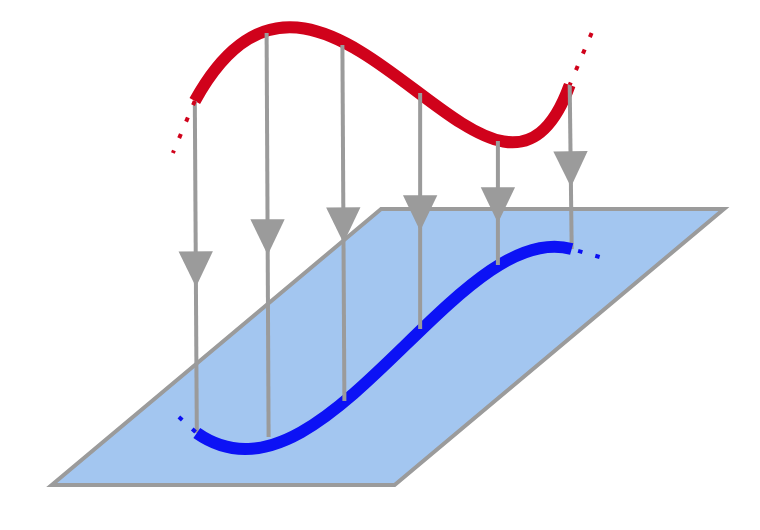
I build cheap alternatives to the traditional, expensive simulation pipelines evaluating real-world physical systems, such as weather forecasting. Instead of requiring hours' (or days') worth of computations, reduced-order models take minutes to run, while still capturing the essential physics of the problem.
Forecasting Pipelines
Data assimilation and uncertainty quantification for digital twins
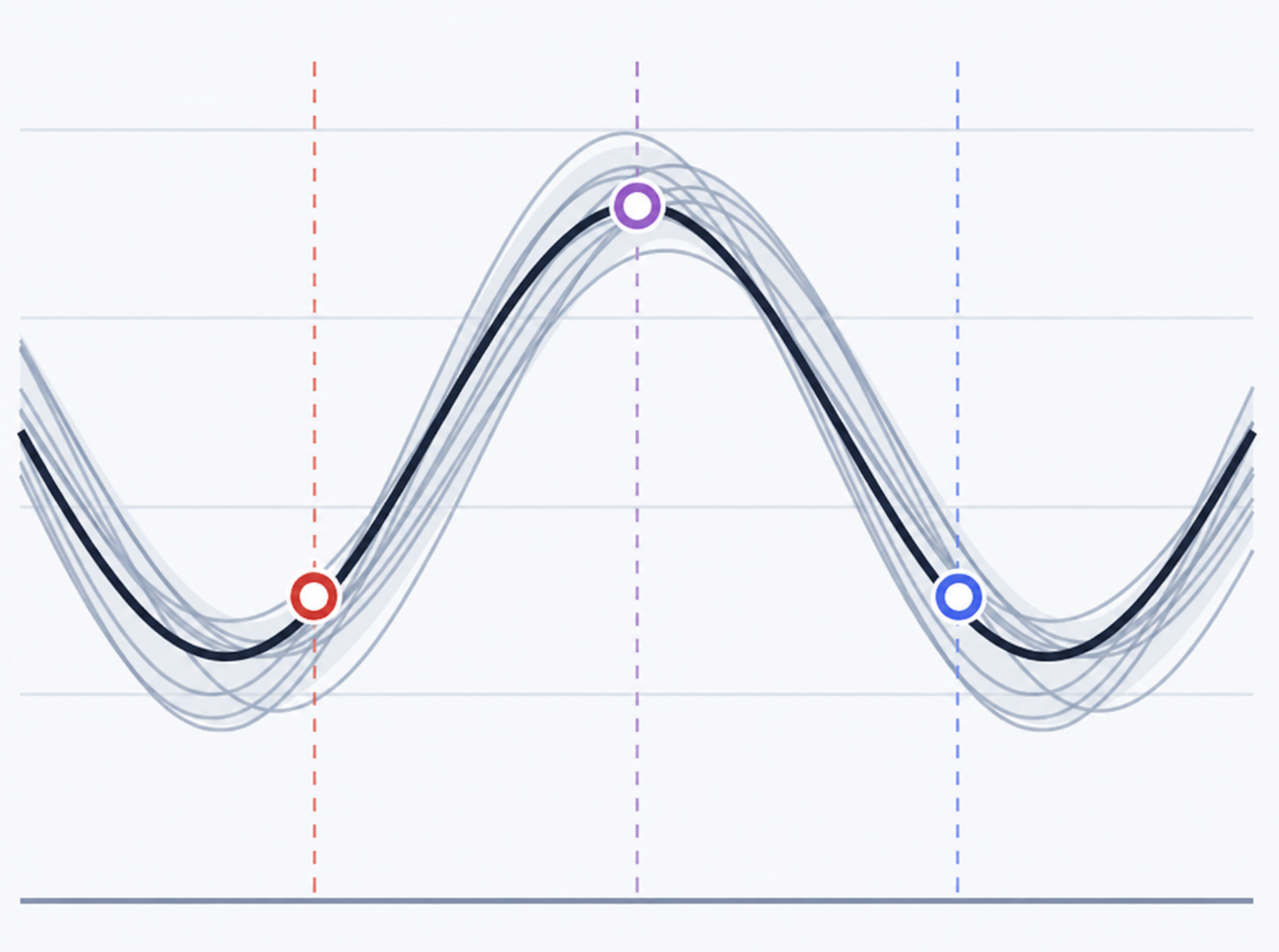
These techniques combine sparse, noisy observations with a physical model to produce unknown quantities of interest and their uncertainty. A typical example: given a few imperfect measurements of wind speed and humidity in a given region, what is the most likely state of the atmosphere, and how confident can we be in that estimate? To answer this, I develop Bayesian methods, variational approaches and other staples of modern data science.
Scientific Software
Building performant, reliable software for the scientific community
I develop performant scientific software that is designed to deliver meaningful results across a range of engineering and scientific applications. As I tackle primarily large-scale physical problems, HPC capabilities are a central feature of the code I write. I build with reproducibility and documentation from the outset, and I make my work open source so that it can be used, extended, and built upon by anyone interested.
Machine Learning
Developing modern approaches for scientific applications
The massive availability of data has opened up new opportunities for machine learning techniques. These present valid alternatives to traditional physics-based approaches, as they enable the discovery of patterns and relationships even in highly nonlinear regimes. Although it can sometimes be difficult to keep up with a field that seems to develop almost daily, I try to stay on top of these developments and actively explore and implement new methods in my research. As there is still a lot to discover, this is an exciting area to work in: there is still plenty of room to figure out what really works, when, and why.